He launched again, no witness but the fog. The motor idled low, coughing against the silence. The world had narrowed to fifty feet of gray and the sound of his own breath.
At the mark, the depth finder went blind. Numbers blinked nonsense, then zeros. The sea below glowed faintly again, that same impossible green bleeding through silt and shadow.
Eli dropped anchor—half ritual, half defiance—and waited. Minutes stretched. Then the rope went taut, vibrating like a plucked string.
“You can have it,” he muttered. “Whatever it is.” But surrender only works when both sides agree.
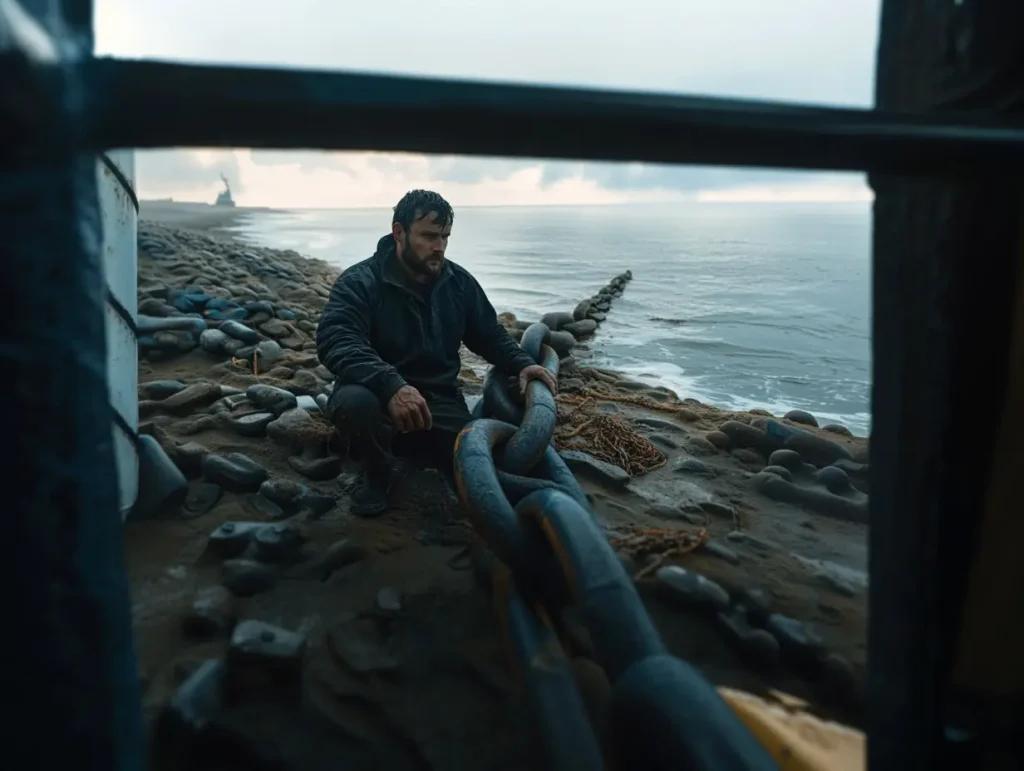
The chain broke surface without being pulled. Links slick with algae rose slow, coiling like a serpent remembering its spine. Water ran from them in dark streams that smelled of old iron and long-dead rain.
Eli stumbled back. The chain stopped midair—suspended, trembling—as if held by unseen hands. Then it dropped, vanishing into the sea with a force that rocked the skiff broadside.
From below came a sound that didn’t belong underwater—a deep, metallic exhale, the sea releasing pressure it had been saving too long.
And when the noise faded, the water went still again, but the fog began to move—not drifting, crawling, rolling inland like something newly freed.
Behind him, Bracken’s shore vanished, and for the first time in his life, Eli didn’t know which direction home was anymore.