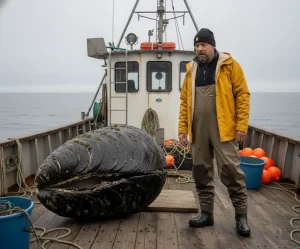

Back at the dock, Eli kept the story quiet. Men like him didn’t talk about fear—they named it weather and got on with it. But Bracken was a town that eavesdropped on silence.
By sundown, three fishermen were already waiting outside the bar, the kind that smelled like diesel and memory. “Heard you snagged the bottom itself,” one said. “Chain from the dredge barge, maybe.”
Eli shrugged, ordered coffee, not whiskey. “Might’ve been nothing.”
“Ain’t nothing out there,” muttered another. “Not since the Leviathan took the Bell.” The younger men snickered, but nobody really laughed. Local legends work best when they half-fit the facts.
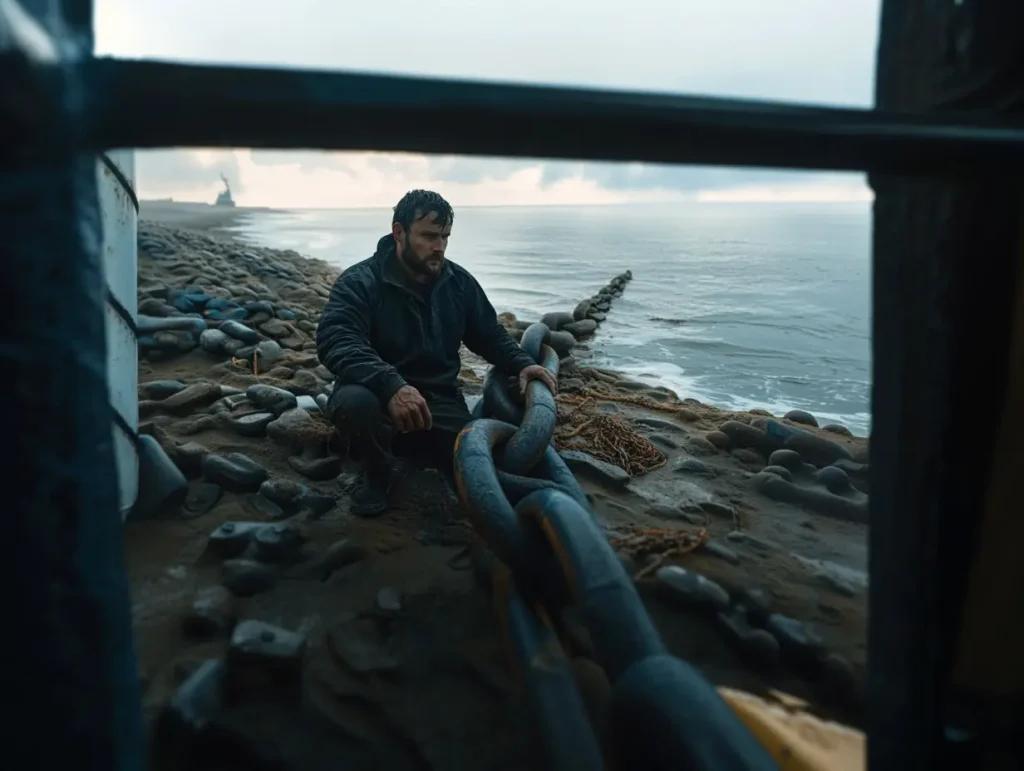
Old Pike leaned forward, voice like wet rope. “You saw the ring, didn’t you? The one they sunk in ’58. Said it was for holding the wreck, but some of us remember the night it burned green.”
Eli said nothing. The bar light flickered, a bulb dying slow. The sound of the jukebox swallowed its own song mid-chorus.
“If you found it,” Pike said, “don’t haul it. They said once it’s pulled up, the fog comes with it—and don’t stop till it finds the ones who woke it.”
The word woke hit something raw in Eli’s gut. He thought of Maggie’s picture on the mantel, the storm that took her, the day the chain in his dream had broken first.
Maybe he hadn’t just found iron; maybe the sea had found the part of him it wanted back.